
Tiruvannamalai District Overview
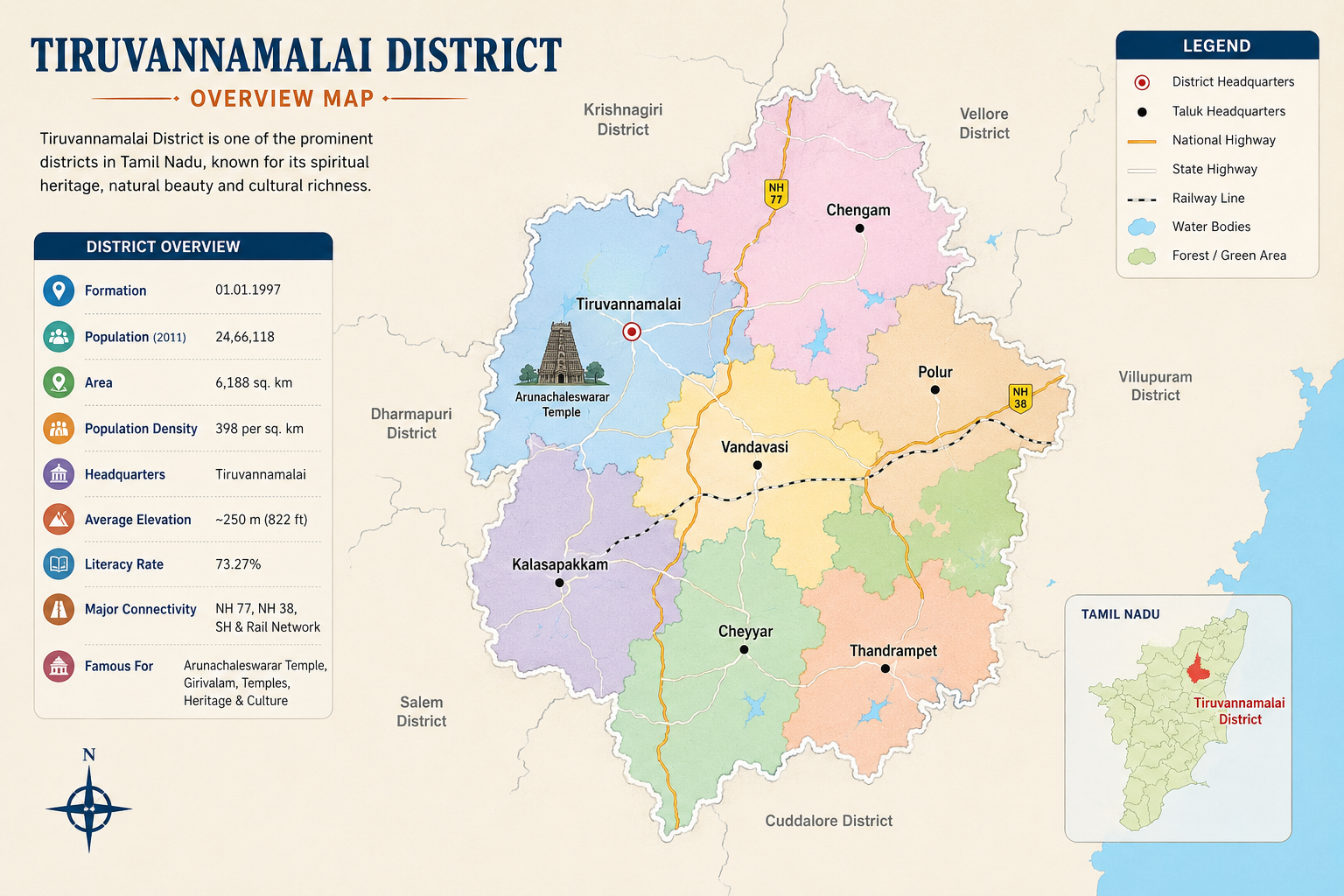
Tiruvannamalai District, located in the northern part of Tamil Nadu, is renowned for the world-famous Arunachaleswarar Temple and the sacred Annamalai Hills, attracting millions of pilgrims and tourists every year. Rich in history, culture, and spirituality, the district beautifully blends ancient heritage with breathtaking natural landscapes. It is also home to renowned educational institutions, quality healthcare facilities, thriving businesses, and popular attractions such as Jawadhu Hills, Sathanur Dam, and Beemanmadavu Waterfalls.
With a strong agricultural base, growing economy, and excellent road and rail connectivity, Tiruvannamalai is one of Tamil Nadu’s leading spiritual and cultural destinations. Its unique blend of heritage, nature, and modern development makes it an ideal place to visit, explore, and experience the rich traditions of the region.
District Population & Demographics
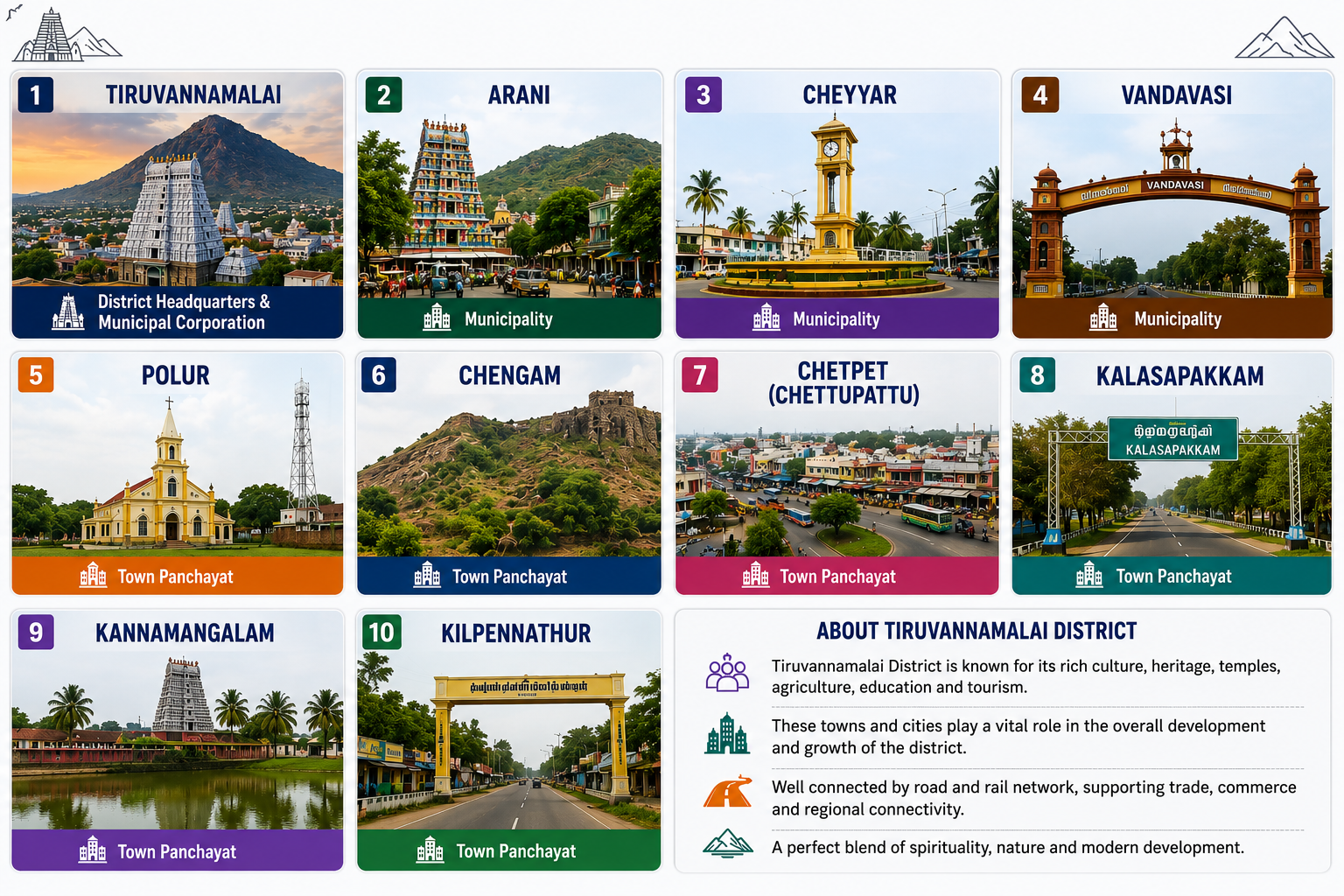
Tiruvannamalai District is one of the largest districts in Tamil Nadu, with a population of approximately 2.46 million (24.6 lakh) people. The district has a balanced mix of urban and rural communities, with agriculture, trade, tourism, and small-scale industries contributing significantly to its economy. Tamil is the primary language spoken, while English is widely used for education and official communication. The district has a literacy rate of around 66.5%, reflecting steady progress in education through schools, colleges, and higher educational institutions. The population comprises people from diverse cultural and religious backgrounds, living together in harmony and preserving the district’s rich traditions and heritage. Tiruvannamalai is well known for its vibrant festivals, spiritual gatherings, and strong sense of community, making it a culturally rich and welcoming district.
- Area: 6,191 sq. km
- Literacy Rate: 66.5%
- Urban Population: ~22%
- Rural Population: ~78%
Major Towns & Cities in Tiruvannamalai District
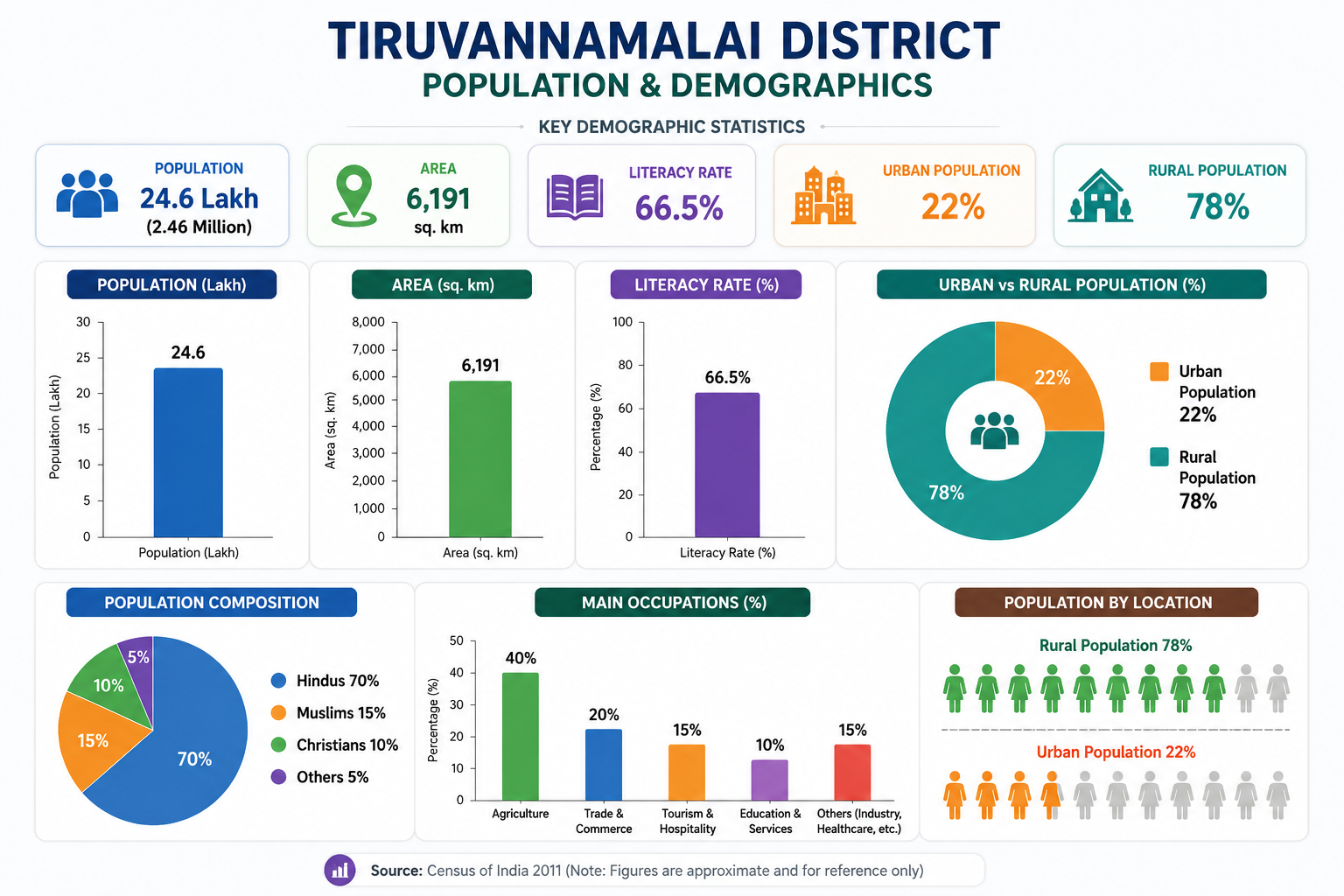
Tiruvannamalai District is home to several prominent towns and urban centers that play a vital role in the district’s cultural, economic, educational, and administrative development. The district headquarters, Tiruvannamalai, is internationally recognized for the magnificent Arunachaleswarar Temple, the sacred Annamalai Hills, and the world-famous Karthigai Deepam Festival, attracting millions of devotees and tourists every year. It serves as the district’s primary center for government administration, education, healthcare, commerce, and tourism. Among the major municipalities, Arani is widely known for its rich silk weaving tradition and thriving textile industry, making it one of Tamil Nadu’s leading silk production centers. Cheyyar has developed into an important industrial and commercial hub, supported by manufacturing units, educational institutions, and growing infrastructure. Vandavasi, known for its historical significance and famous Battle of Vandavasi, continues to be a key center for trade, agriculture, and local businesses while preserving its cultural heritage.
The district also includes rapidly developing towns such as Polur, Chengam, Chetpet (Chettupattu), Kalasapakkam, Kannamangalam, and Kilpennathur. These towns contribute significantly to agriculture, horticulture, local markets, education, transportation, and tourism. Their strategic locations and improving infrastructure have strengthened regional connectivity and supported the overall growth of the district. Together, these towns represent the diverse character of Tiruvannamalai District by combining spirituality, history, education, commerce, agriculture, and modern development. With excellent road and rail connectivity, expanding public services, and a strong cultural identity, the district continues to grow as one of Tamil Nadu’s most important destinations for pilgrimage, tourism, business, and community life.
District Statistics & Measurements
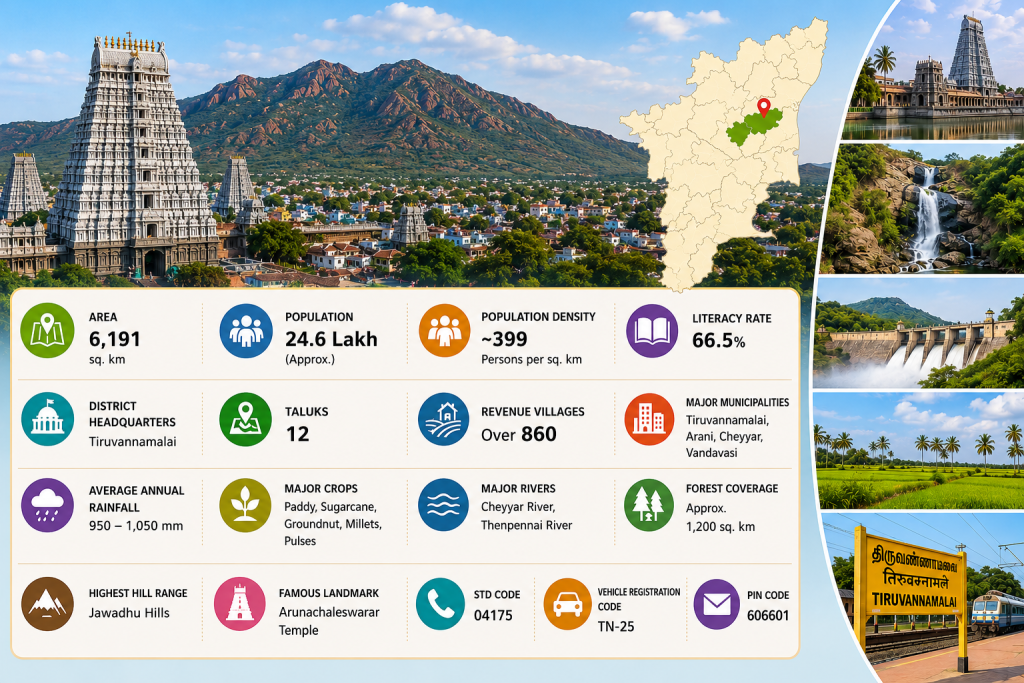
Tiruvannamalai District is one of Tamil Nadu’s most historically and spiritually significant districts, covering an area of 6,191 square kilometers with an estimated population of 24.6 lakh. The district has a literacy rate of 66.5% and a population density of approximately 399 persons per square kilometer. It is administratively divided into 12 taluks and over 860 revenue villages, with Tiruvannamalai serving as the district headquarters. Major municipalities such as Arani, Cheyyar, and Vandavasi contribute significantly to the district’s administration, education, healthcare, and commerce. Agriculture remains the backbone of the district’s economy, with major crops including paddy, sugarcane, groundnut, millets, and pulses. The district is blessed with natural attractions such as the Jawadhu Hills, Cheyyar River, Thenpennai River, and nearly 1,200 sq. km of forest cover. Receiving an average annual rainfall of 950–1,050 mm, Tiruvannamalai supports both agriculture and tourism. The world-renowned Arunachaleswarar Temple, along with the district’s excellent road and rail connectivity, makes Tiruvannamalai a prominent destination for pilgrimage, tourism, and sustainable development in Tamil Nadu.
Historical Background of Tiruvannamalai District
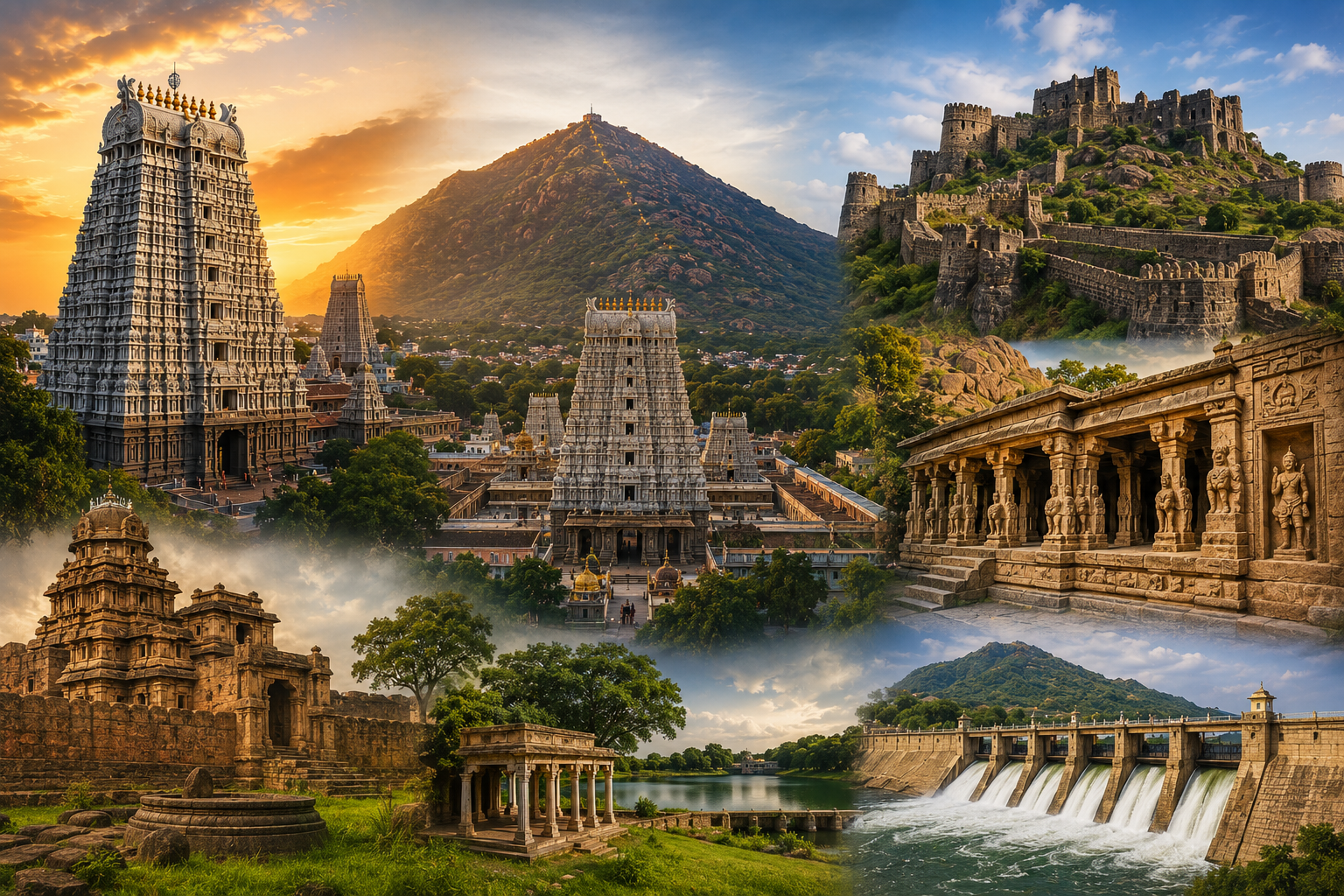
Tiruvannamalai District has a rich history that dates back over a thousand years, making it one of Tamil Nadu’s most significant cultural and spiritual regions. The district was ruled by several powerful dynasties, including the Cholas, Pandyas, Hoysalas, Vijayanagara Empire, and the Nayaks, all of whom contributed to its architectural, religious, and cultural heritage. Their influence can still be seen in the magnificent temples, ancient inscriptions, and historic monuments spread across the district.
The district is best known for the Arunachaleswarar Temple, one of the largest and oldest Shiva temples in India. Dedicated to Lord Shiva as the Agni (Fire) Lingam among the Pancha Bhoota Sthalams, the temple has been an important pilgrimage center for centuries. The sacred Annamalai Hill is deeply connected to Hindu mythology and is believed to symbolize Lord Shiva himself. Every year, millions of devotees visit Tiruvannamalai to participate in the world-famous Karthigai Deepam Festival and perform the sacred Girivalam around the hill.
Apart from its spiritual heritage, Tiruvannamalai played an important role during India’s freedom movement and has remained a center for education, agriculture, trade, and culture. The district is also home to historic sites such as Gingee Fort, Tirumalai Jain Temple, and Sathanur Dam, reflecting its diverse historical and architectural legacy. Today, Tiruvannamalai continues to preserve its ancient traditions while embracing modern development, making it one of Tamil Nadu’s most treasured districts.
Area and Geographical
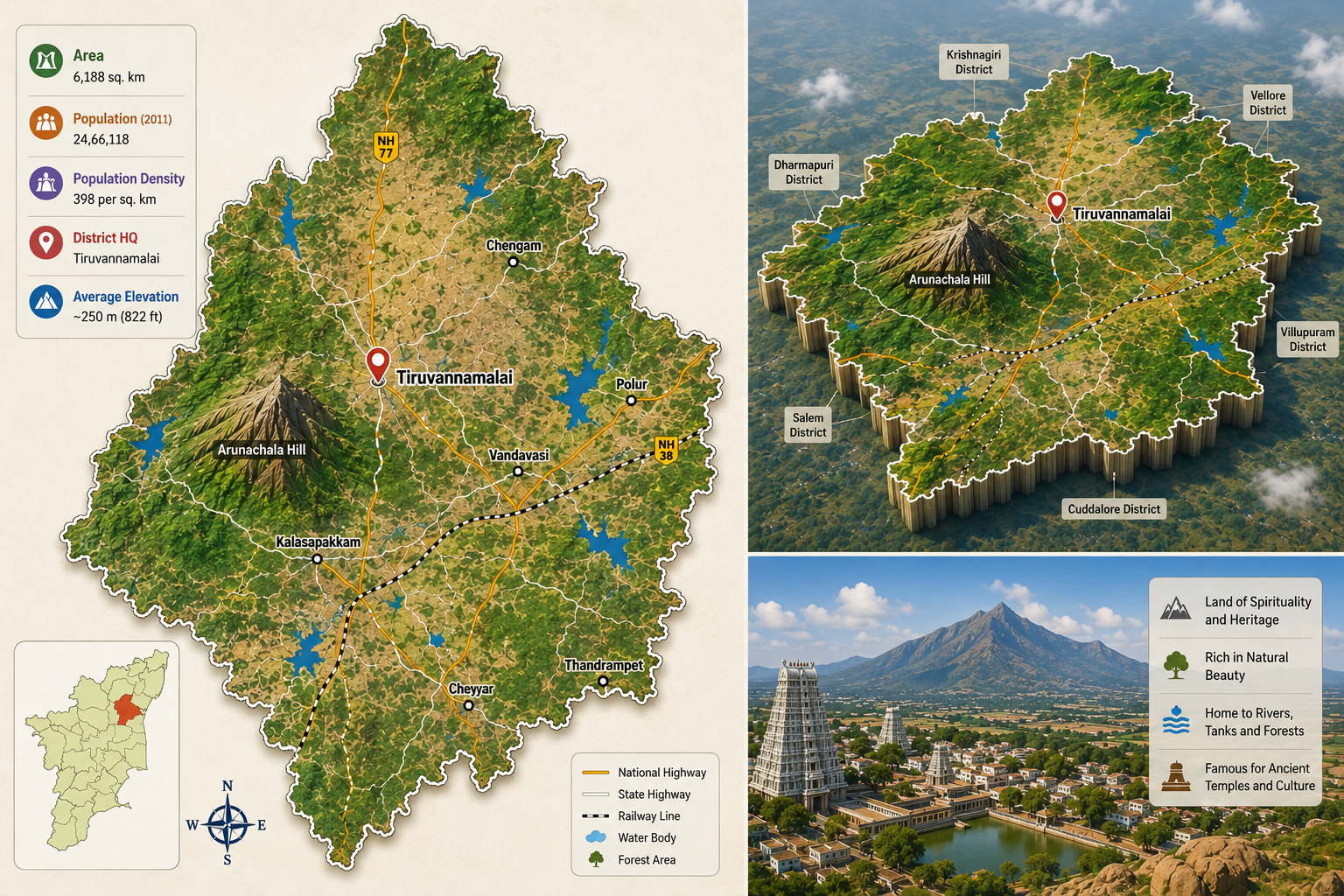
Tiruvannamalai District covers an area of approximately 6,191 square kilometres and is located in the northern part of Tamil Nadu. The district has a diverse geographical landscape, ranging from hilly and rocky regions to fertile agricultural plains, forests, water bodies, and rural settlements. The Arunachala Hill is the most prominent geographical feature of the district and forms an important part of its natural, cultural, and spiritual identity. The surrounding Eastern Ghats contribute to the district’s scenic beauty, while agricultural lands across the plains support a large rural population. Tiruvannamalai District is surrounded by Vellore, Ranipet, Kanchipuram, Villupuram, Cuddalore, Salem, and Dharmapuri districts. Its varied terrain and network of roads, towns, villages, forests, and agricultural areas give the district a distinctive geographical character.
Area: 6,191 km²
Headquarters: Tiruvannamalai
Major Geographical
Region: Northern Tamil Nadu / Eastern Ghats region
Revenue & Economy of Tiruvannamalai District

Tiruvannamalai District has a diverse and growing economy supported by agriculture, tourism, trade, textiles, and small-scale industries. Agriculture remains the backbone of the district, with major crops including paddy, sugarcane, groundnut, millets, and pulses. Tourism also contributes significantly to the local economy, with attractions such as the Arunachaleswarar Temple, Annamalai Hills, Jawadhu Hills, and Sathanur Dam drawing millions of visitors each year.
The district is also known for Arani’s famous silk weaving industry, vibrant local markets, and expanding commercial activities. Small and medium-scale enterprises, retail businesses, and service sectors provide employment opportunities and strengthen the local economy. Government initiatives, improved infrastructure, and better connectivity continue to support economic growth, making Tiruvannamalai an important center for commerce, culture, and sustainable development in Tamil Nadu.